Female-Specific Programming: What Actually Changes
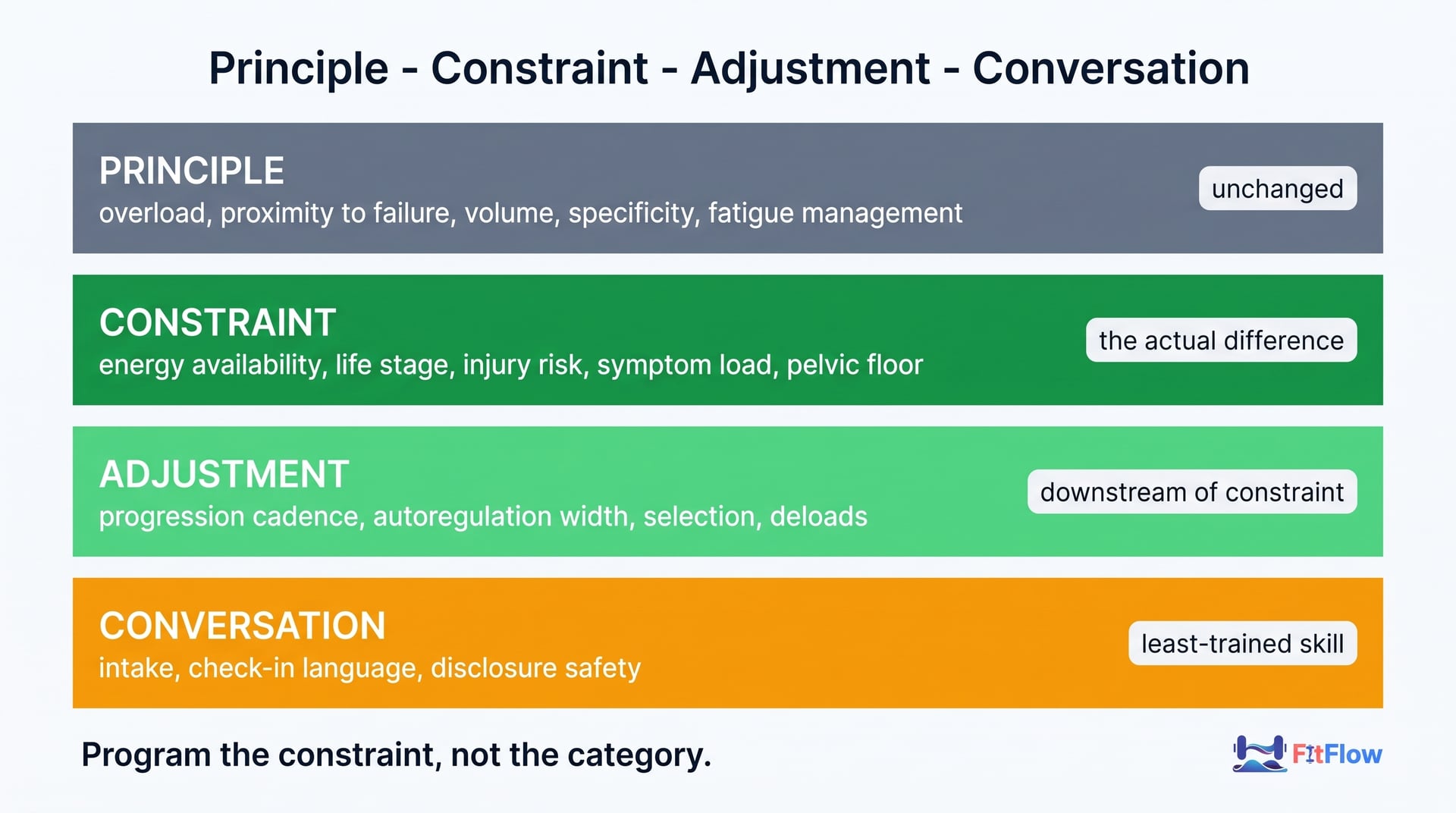
Between 2014 and 2020, six leading sport and exercise science journals published 5,261 studies covering more than 12.5 million participants. Six per cent of those studies looked exclusively at women. Thirty-four per cent of all the participants were female (Cowley et al., 2021). At roughly the same time, the Health & Fitness Association's 2025 consumer report found that women drove much of 2024's growth in personal training, up 15.9% to 7.3 million participants (HFA, 2025).
So the industry is coaching more women than it ever has, using an evidence base that largely wasn't built by studying them. And into that gap has rushed an entire product category: cycle-phase training calendars, sex-specific rep ranges, hormone-timed nutrition protocols, all delivered with a confidence the underlying research does not support.
Here is the uncomfortable part for both camps. The gap is real. What has been sold to fill it mostly isn't.
This piece is not a workout plan and it is not a list of things women should do differently. It is an honest account of what the evidence says changes when you program for a female client, what does not, and — the part almost nobody writes — the intake and conversation that tells you which of those applies to the specific person in front of you.
The short version fits on a sticky note. The principles don't change. The constraints do. Program the constraint, not the category.
The evidence gap is real. It doesn't mean what you were told it means.
Start with the honest version of the problem, because it is worse than most coaches realise and it points somewhere different than most content suggests.
Cowley and colleagues audited 5,261 publications across six major journals over seven years. Sixty-three per cent of publications included both sexes, 31% were male-only, and 6% were female-only. Of the 12.5 million participants across the corpus, 66% were male. Their conclusion is blunt: most conclusions drawn from sport and exercise science research might only be applicable to one sex.
That is a genuine problem and it deserves to be named without flinching. But watch what happens next in almost every piece of content built on this statistic. The argument runs: research has ignored women, therefore women need fundamentally different training, therefore here is our phase-based protocol.
That is a non sequitur, and it is the single most expensive error in this entire topic.
An evidence gap means we know less. It does not mean we know the opposite. When a question is under-studied, the correct response is to lean harder on the mechanisms that are well established across populations, hold the uncertain claims loosely, and pay closer attention to the individual in front of you. It is not to invent a confident alternative system and sell it.
The irony is sharp. The same content that correctly identifies a research gap then fills it with claims that have less evidentiary support than the general principles it is replacing. You cannot solve an evidence problem with more confident guessing.
There is a second thing worth noticing about that 6% figure. Where research has been done — and on the questions that matter most to a working coach, quite a lot has — the findings are reasonably consistent. We are not operating in the dark. We are operating with good evidence on the mechanism and thin evidence on some of the edges, which is a completely different situation and calls for a completely different response.
What doesn't change: the principles
This is the load-bearing claim of the whole piece, so let's be specific rather than hand-wavy about it.
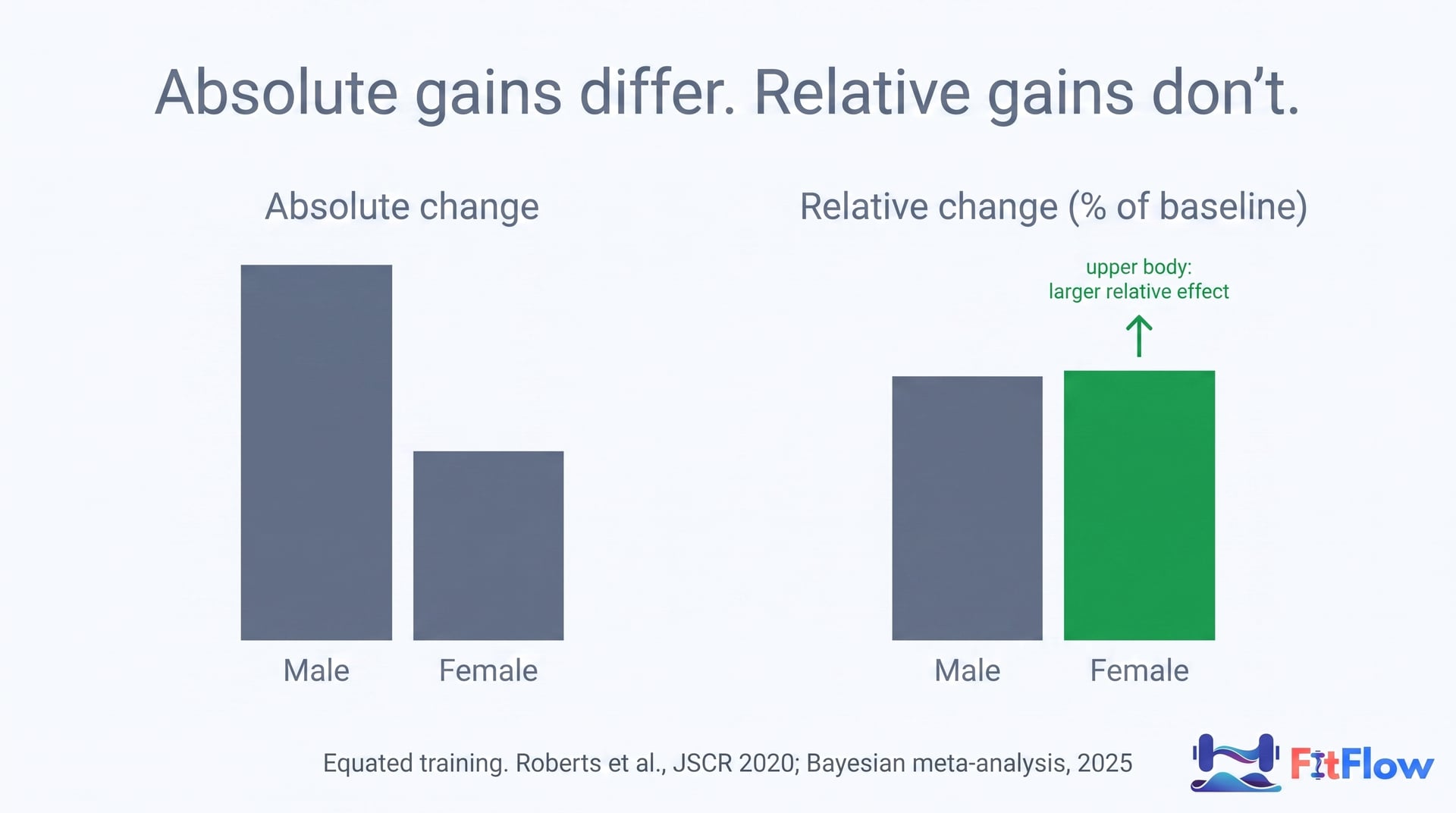
When you equate training — same programme, same relative loads, same proximity to failure — men and women adapt to resistance training in remarkably similar ways. The systematic review and meta-analysis in the Journal of Strength and Conditioning Research found effect sizes for hypertrophy and lower-body strength were similar between sexes, with a significant effect actually favouring females for relative upper-body strength gains (Roberts et al., JSCR 2020). A later Bayesian meta-analysis of muscle-size changes reached the same place: males display greater absolute gains, but for relative change there is no meaningful sex difference (Refalo et al., 2025).
Read that carefully, because the absolute-versus-relative distinction is where most of the confusion in this topic lives. A man who starts with more muscle mass will add more kilograms of it. That is arithmetic, not physiology. As a percentage of where she started, your female client builds muscle at the same rate, and gets relatively stronger in the upper body faster.
So what carries over unchanged?
Progressive overload. The requirement to systematically increase demand over time is not sex-specific. If it isn't working, the problem is almost never the principle.
Proximity to failure. Stimulus depends on how close a set gets to the limit, and the relationship holds across sexes.
Volume as the primary hypertrophy driver, with the same diminishing-returns ceiling that stalls programs around week six regardless of who is running them.
Specificity. Adaptation follows the demand imposed. No asterisk.
Fatigue management. Fatigue accumulates and must be dissipated. Same logic, same tools.
There is one interesting wrinkle that gets over-extrapolated, so let's handle it precisely. Research on fatigue during and recovery from resistance exercise has found women completing substantially more total repetitions in a fatigue protocol than men, with the difference driven mainly by faster recovery during the rest intervals rather than by slower fatigue within each set (PeerJ, 2025). In that study, female participants completed 58.3 ± 27.3 reps versus 29.6 ± 10.6 for males, while post-training soreness and 1RM recovery did not differ significantly.
That is a real and useful finding. It means many female clients tolerate more total volume within a session and may need less inter-set rest to hit the same quality. It does not mean women should be prescribed higher rep ranges as a rule. It means the same autoregulation you already use — watch performance drop-off, adjust rest and volume to what the client actually sustains — will naturally land somewhere slightly different for many female clients. That is your existing system doing its job, not a new system.
Anyone selling you a separate rep-range chart for women is selling a solution to a problem your autoregulation already solves. It's the same instinct that drives coaches to swap exercises when the real issue is elsewhere.
The cycle question, answered honestly
This is the section you came for, so here it is without hedging.
Programming to menstrual cycle phase is not supported by current evidence. A review in Frontiers in Sports and Active Living concluded that current evidence shows no influence of menstrual cycle phase on acute strength performance or on longer-term strength and hypertrophic adaptations to resistance training (Colenso-Semple et al., 2023). A systematic review with meta-analysis on maximal strength across cycle phases reached a similar conclusion, while noting something important about why the answer is uncertain: the underlying literature has persistent methodological problems, including inconsistent cycle-phase verification (Systematic review with meta-analysis, 2024).
That second point matters more than it first appears. The honest statement is not "phase definitely doesn't matter." It is: the studies that would tell us are mostly small, mostly methodologically weak, and in aggregate show no reliable effect. Where effects have been reported — slightly greater strength loss and soreness in the early follicular phase in one analysis — they come from very few studies with small samples and considerable heterogeneity.
You cannot build a programming system on that. You especially cannot build a calendar on it, which is what phase-based periodisation actually is: a schedule imposed on a client from a population average that the population data does not support.
Now the pivot, and this is the part the topic has been missing.
Symptoms are not the same variable as phase.
Cycle-related symptoms are common and they are not imaginary. A survey of 1,086 athletes across 57 sports found that among the 407 participants not using hormonal contraceptives, dysmenorrhea was reported by 74% and premenstrual symptoms by 78%, with those symptoms influencing perceived aerobic fitness, muscle strength, mental sharpness, balance and sleep quality (Frontiers in Physiology, 2022). More recent work in Sports Medicine has moved the question in exactly the right direction: examining phase alongside symptoms, motivation and readiness to perform in resistance training (Sports Medicine, 2026).
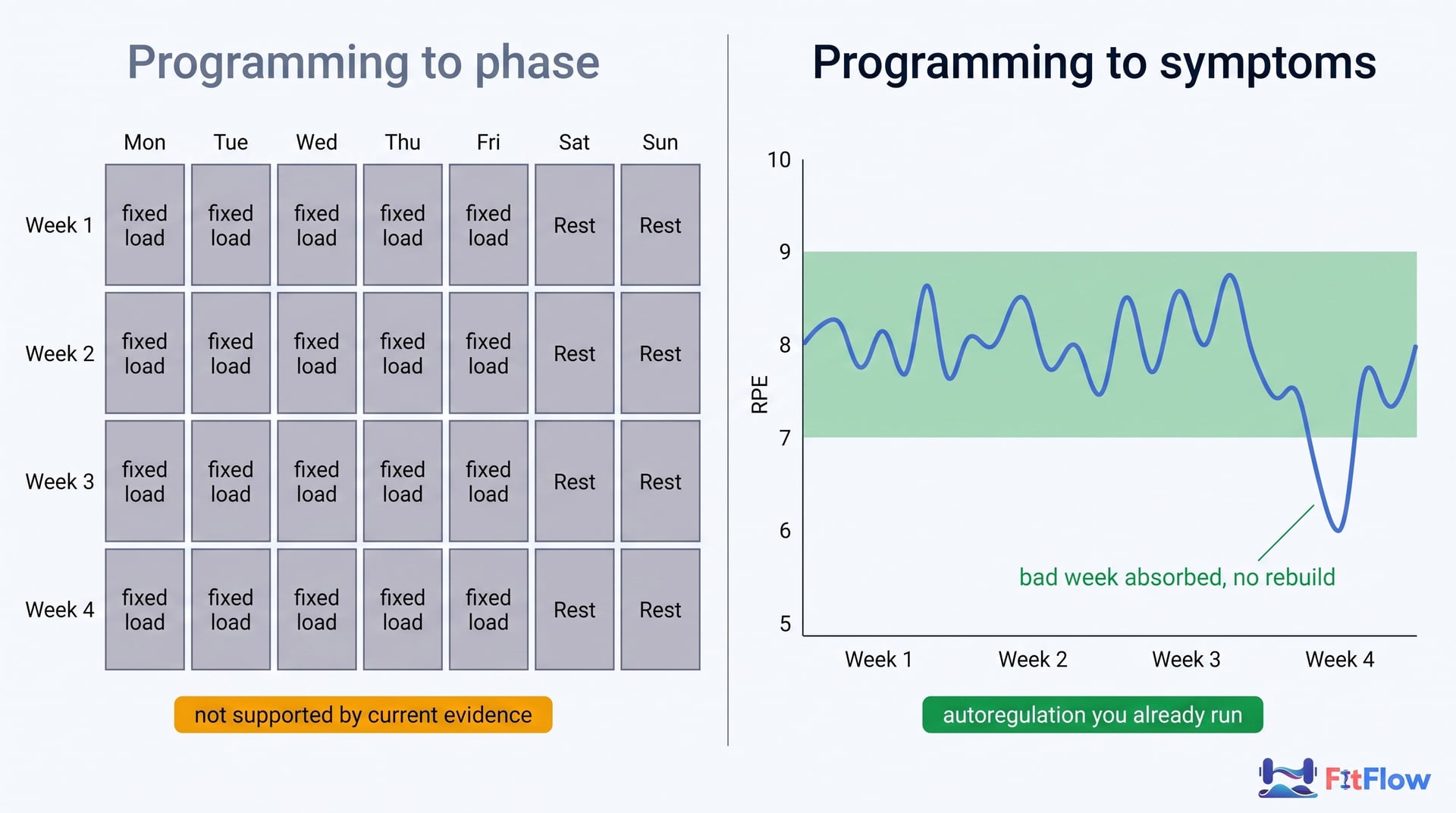
The distinction is the whole practical answer. Programming to a phase means predicting how a client will feel from a date on a calendar. Programming to symptoms means responding to how she actually reports feeling — which is not a female-specific technique at all. It is autoregulation, using the RPE and RIR system you already run.
So: don't build a phase-based mesocycle. Do build enough autoregulation width into the program that a bad week gets absorbed without a rebuild, and do ask about symptom load in your check-in so that "I felt awful on Tuesday" becomes data instead of noise. If a client tracks her cycle and notices a reliable personal pattern, that is a genuinely useful individual observation — treat it the way you would treat any other client-specific pattern. What you do not do is impose the pattern before you have observed it.
Programming to symptoms instead of phase only works if your intake actually asks about symptom load, and your program already has the autoregulation width to absorb it. Both are in the free Female-Client Programming Intake & Adjustment Checklist: question 10 sets your band width, and Section 2 is the bad-day rule — written down before the bad day. Get the free checklist.
What actually changes: the constraint set
Here is where the real differences live, and none of them are about how muscle responds to load.
Energy availability
This is the most important item on the list and the most under-recognised in commercial coaching.
Relative Energy Deficiency in Sport (REDs) describes what happens when energy intake does not support both training and physiological function. The 2023 IOC consensus statement updated the model substantially: low energy availability exists on a spectrum from adaptable to problematic, it is not restricted to elite athletes, and it produces consequences across bone health, endocrine function, immunity, and — relevantly for you — training adaptation (IOC, 2023). The 2025 update to the Female Athlete Triad Coalition consensus statement provides clinical guidelines for screening, diagnosis and return to play (Williams et al., 2025).
Why it matters operationally: a client in chronic low energy availability will not adapt to a well-designed program. You will read the stall as a programming problem and add volume, or read it as an adherence problem and add pressure. Both make it worse. This is the mechanism behind a large share of the cases where a client stops progressing for reasons that have nothing to do with the program.
It intersects with the commercial reality that a meaningful proportion of female clients arrive with a body-composition goal and an under-fuelling habit already in place. You are not diagnosing anything, and nothing here is medical advice. You are noticing a pattern and knowing where it goes.
Life stage
Perimenopause and menopause genuinely change the training context — and this is where honesty about evidence quality matters most. Post-menopause, resistance training has solid support for bone mineral density: a 2025 meta-analysis found significant improvements at the lumbar spine and femoral neck, with moderate-intensity resistance training around three days per week as a clinically sensible default (J Orthop Surg Res, 2025). During perimenopause specifically the evidence is much thinner: a 2025 systematic review found six eligible studies, all low quality and high risk of bias, and reported that strength training did not improve areal BMD or lean mass during perimenopause, while strength training and walking did benefit both during early post-menopause (Whitman et al., 2025).
Say that plainly to a client rather than overselling: resistance training is well supported for bone and lean mass after menopause, the perimenopausal picture is genuinely unclear, and none of that is a reason to train less.
Pregnancy and postpartum require a structured return rather than a vibe. Current postpartum guidance is more permissive than the folklore: women with pelvic-floor or abdominal-wall dysfunction do not need to avoid physical activity, and moderate-to-vigorous activity postpartum is associated with reduced odds of depression, type 2 diabetes and urinary incontinence. Return to running is typically staged toward roughly the 13-week mark with a structured protocol, informed by the 2024 international Delphi consensus published in BJSM (BJSM, 2024), alongside the 2025 Canadian postpartum activity guideline. Pelvic-floor symptoms are a referral, not a programming variable you solve alone.
Injury-risk profile
The ACL risk differential is real and the intervention evidence is unusually good. A 2025 meta-analysis found neuromuscular training reduced ACL injury risk by roughly 50% (RR 0.50, 95% CI 0.31–0.81) and overall knee injury risk by 22% (RR 0.78, 95% CI 0.65–0.94) in female team athletes (Meta-analysis, 2025). The critical detail for a coach: compliance ≥75% was the most effective single factor, and effectiveness is strongly age-dependent — pronounced in athletes 18 and under, non-significant above 18 in the earlier age-stratified analysis.
Translation: if you coach adolescent female athletes, a compliant neuromuscular warm-up is one of the highest-leverage things you will ever program. If you coach general-population adults, it is sound practice with a weaker evidence claim — include it, don't oversell it.
Nutrition constraints that are genuinely sex-relevant
Keeping this proportional, because it is a supporting constraint rather than the subject. Protein requirement estimates for pre-menopausal female athletes cluster around 1.4–1.7 g/kg/day depending on training mode, with the ISSN position stand on the female athlete recommending the mid-to-upper end of standard sport-nutrition ranges (1.4–2.2 g/kg/day) across menstrual states (ISSN, 2023). Notably, the practical guidance is to meet total daily protein consistently and distribute it across meals regardless of cycle phase — the same conclusion the phase literature keeps producing. Iron status deserves a mention as a genuine sex-linked consideration, and it is a referral for testing, not something you assess. For everything else, the simple nutrition frameworks you already use apply without modification.
The Principle → Constraint → Adjustment → Conversation model
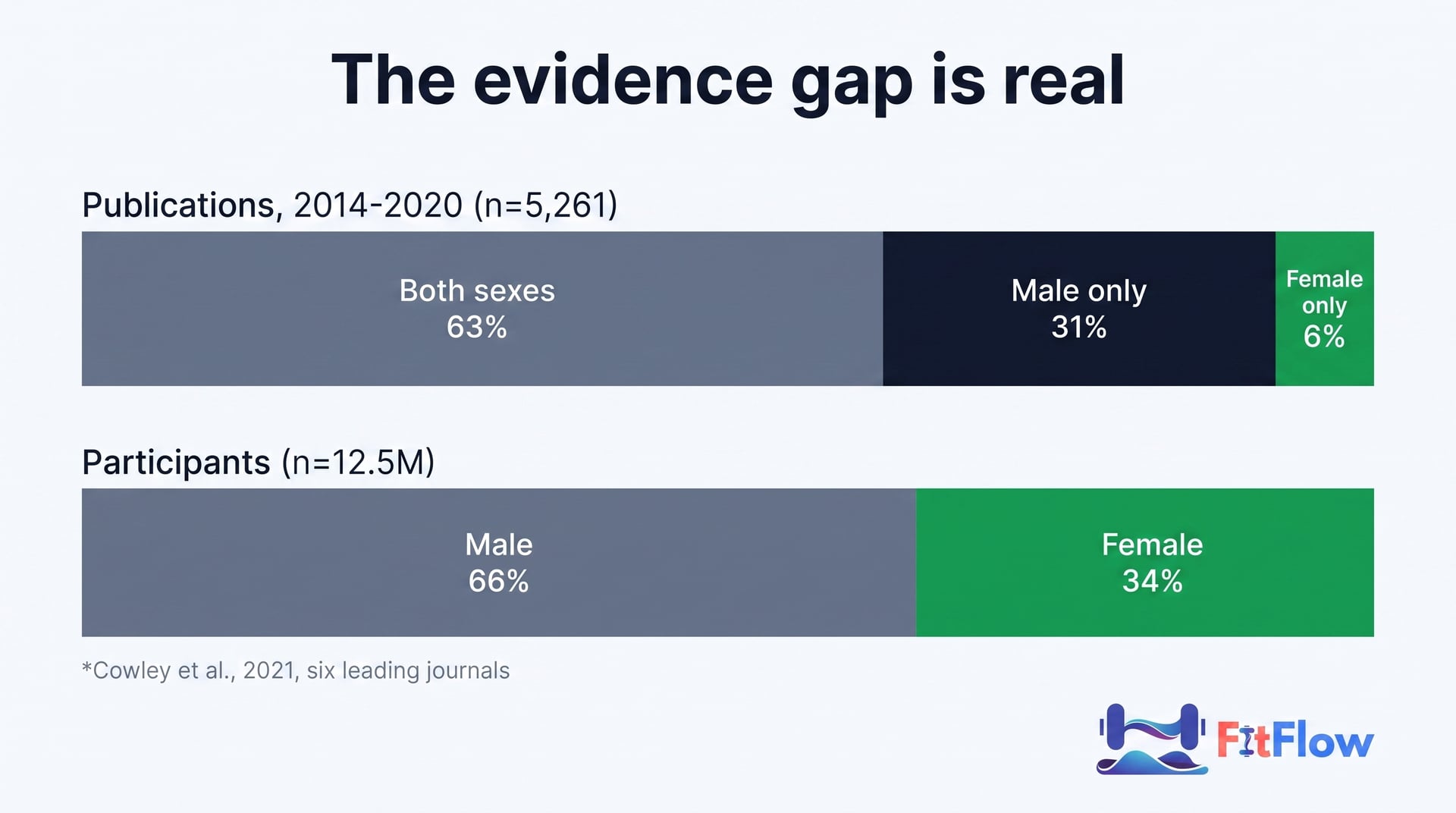
Four layers. Only two of them change, and neither of them is the one everyone argues about. The table below is the whole argument on one screen.
Layer | What it holds | Does it change for female clients? |
|---|---|---|
Principle | Overload, proximity to failure, volume, specificity, fatigue management | No — the adaptation mechanism is shared |
Constraint | Energy availability, life stage, injury-risk profile, bone and joint history, symptom load, pelvic-floor status | Yes — this is the actual difference |
Adjustment | Progression cadence, autoregulation width, exercise selection, deload triggers | Downstream of constraint, never downstream of sex |
Conversation | Intake questions, check-in language, goal framing, disclosure safety | Yes — and it's the least-trained skill in the profession |
The failure modes map cleanly onto the layers. The "totally different" camp edits the Principle layer, which is the one layer the evidence says to leave alone. The "no difference" camp ignores the Constraint and Conversation layers, which is where everything that matters actually sits. Both are making the same category error from opposite directions.
Program the constraint, not the category. A 24-year-old female client with no constraints and a 24-year-old male client with no constraints get the same program, and they should. A 47-year-old perimenopausal client with a history of under-fuelling and a 26-year-old client six months postpartum get different programs from each other — not because of their sex, but because of what showed up on intake.
That is also why this generalises. The same structure handles programming around chronic pain and designing for clients with almost no time. Constraint-first design isn't a female-client technique. It is just design, applied honestly.
The 5-step constraint-first workflow
Operational payoff. You can put this into your onboarding this week.
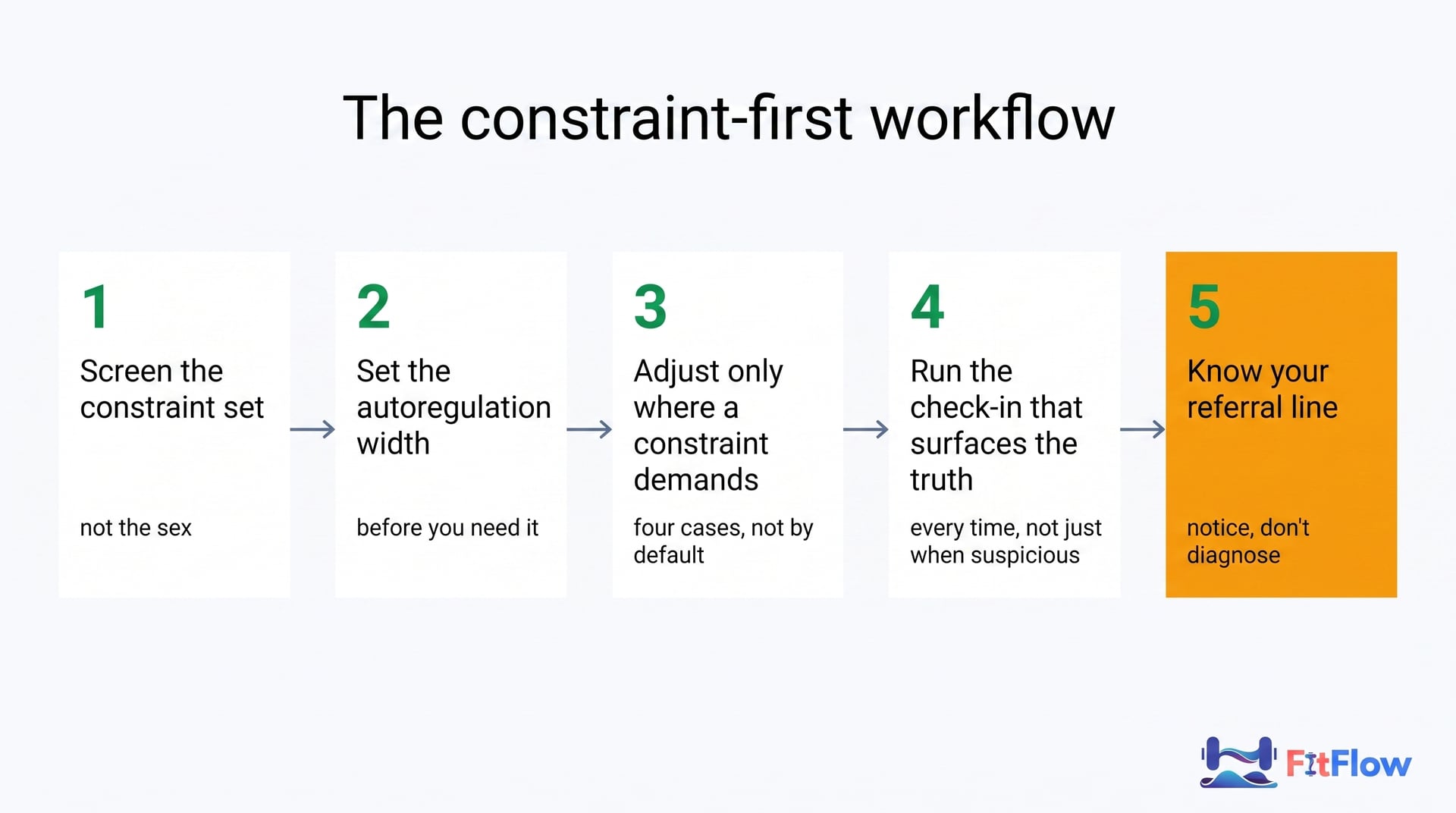
1. Screen the constraint set, not the sex.
Your intake should surface constraints regardless of who is filling it in. For a majority-female roster, that means the form has to include questions many coaches quietly skip. Ask about: current and historical energy intake patterns and any history of disordered eating; menstrual status, including absent or irregular cycles; symptom load and its practical impact on training; pregnancy and postpartum status, with time since delivery and delivery type; pelvic-floor symptoms including leaking under load; life stage and any perimenopausal symptoms; injury history with knee and pelvis specificity; and known bone-density or iron findings.
Frame the section honestly on the form: "These change how I build your program. Answer what you're comfortable with — anything you skip, we can come back to." Consent and control, stated up front, produce better disclosure than any clever phrasing.
That's the list. This is the form. Section 1 of the free Female-Client Programming Intake & Adjustment Checklist is those eight areas written out as 18 questions across five blocks — the framing paragraph above already sits at the top of it, and it counts flags instead of scoring. Paste it straight into your intake. Get the free checklist.
2. Set the autoregulation width before you need it.
Given a high baseline of symptom variability, build the tolerance in from the start rather than patching it monthly. In practice: prescribe in RPE or RIR bands rather than fixed loads; define what a client does on a bad day before she has one (typically hold load, cut the top set, keep the session); and set a rule for how many poor sessions in a row triggers a real conversation instead of a silent grind. This is ordinary RPE/RIR practice with the width dialled to the client, and it is the single highest-leverage adjustment in this entire article.
3. Adjust selection and loading only where a constraint demands it.
Not by default. There are four cases where selection genuinely changes:
Postpartum return — staged loading, structured progression, impact reintroduced late
Pelvic-floor symptoms — modify intra-abdominal-pressure demand while the client is under specialist care
Perimenopausal joint symptoms — manage the loading pattern, not the intensity ceiling
Documented knee-injury risk in adolescent athletes — a compliant neuromuscular warm-up as standing programming
Outside those, changing exercises because a client is female is exactly the reflex that wastes a program's best asset: continuity.
4. Run the check-in that surfaces the truth.
"How was your week?" gets you "good, thanks." The questions that get real answers are specific, low-stakes, and normalised by being asked every time: How did session three feel compared to session one? Anything this week that made training harder than the program? How's your appetite been relative to your training load? Sleeping through?
Two rules make these work. Ask them every check-in, not just when you suspect something — a question asked only when something is wrong reads as an accusation. And react without escalation the first time a client discloses something real, or she will not do it twice. This is the same retention mechanic that governs the month-three drop-off.
5. Know your referral line.
Covered in full below. It is step five because it is the last thing you do, not the least important.
Where the evidence is still thin
If the argument so far reads as more certain than the research supports, that would be the same error the cycle-syncing content makes, so here is the honest ledger.
Perimenopause is under-studied. The systematic review that looked specifically at this window found six studies, all low quality with high risk of bias. Anyone giving you confident perimenopause-specific programming rules is going beyond the evidence — including anyone arguing confidently that nothing changes.
The cycle literature is weak in both directions. "No reliable effect" is a statement about aggregate evidence of mixed quality, not a proof of absence. Cycle-phase verification has been inconsistent, samples are small, and the reviews say so themselves. That should make you sceptical of phase-based programming systems. It should not make you dismissive of a client reporting a consistent personal pattern.
Group averages hide individuals. This is the deepest limitation. Even where the population data shows no effect, individual variation frequently exceeds the group effect. A finding of "no significant difference between phases" across a study population is entirely compatible with one client having a real, repeatable, meaningful pattern. Population evidence tells you what to assume by default. It does not tell you what is true for the person in front of you — which is precisely why the intake and the check-in are load-bearing rather than decorative.
Most training research still under-samples women, and that has not changed since the 2021 audit. Hold conclusions about the edges loosely.
Your referral line
State this to yourself before you need it, because the moment you need it is the moment it is hardest to say.
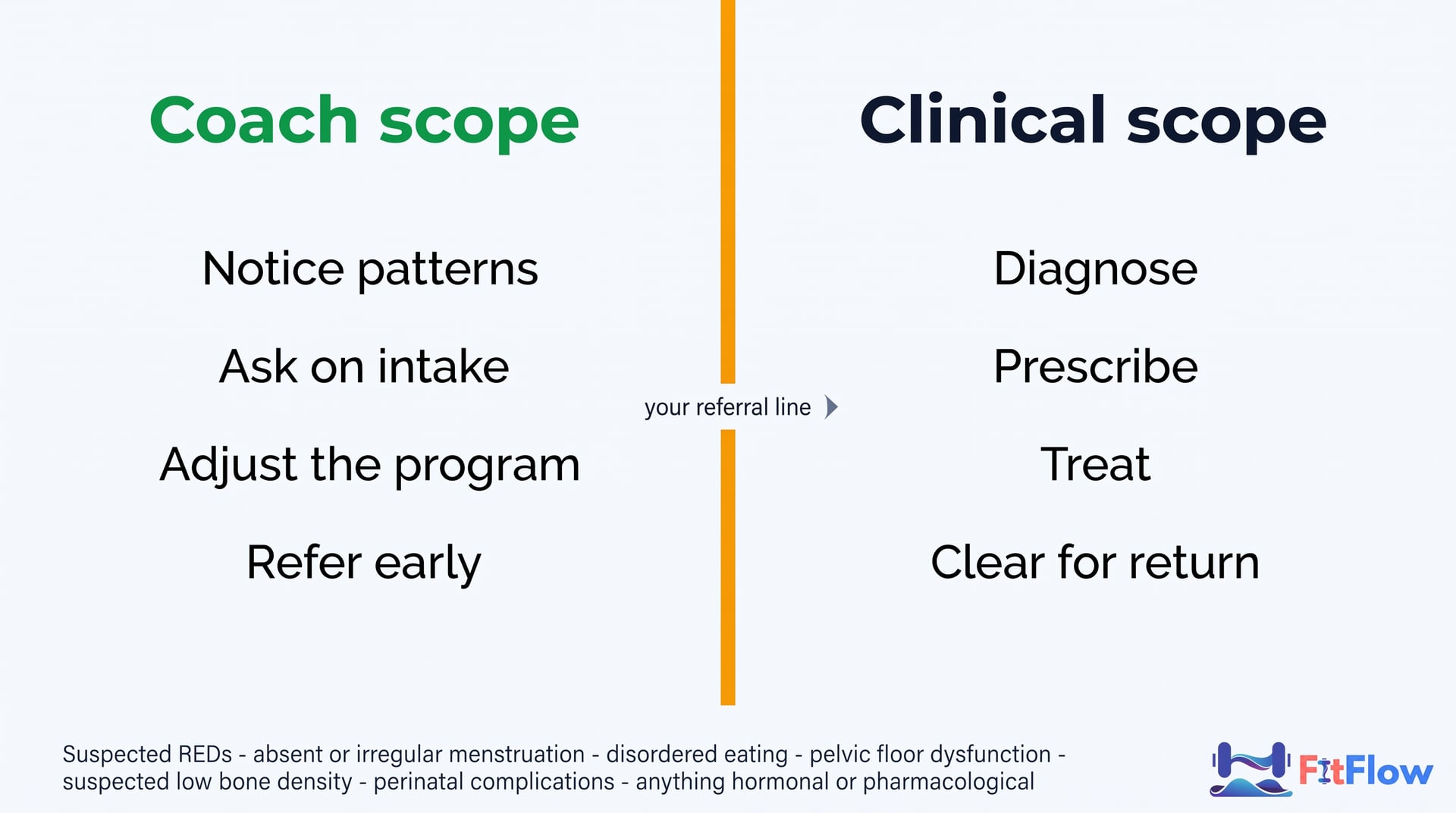
Refer out for: suspected REDs or low energy availability; absent or irregular menstruation; any suspicion of disordered eating; pelvic-floor dysfunction, including leaking, heaviness, or prolapse symptoms; suspected low bone mineral density or a fracture history that doesn't match the mechanism; pregnancy complications or any postpartum return with complicating factors; and anything involving hormones, contraception, HRT, or fertility.
You are not the diagnostician. You are frequently the person best placed to notice — you see this client weekly, under load, over months, which is more observation than most clinicians get. Noticing and referring is within your scope and it is one of the most valuable things you do. Diagnosing, advising on medication, or programming around a suspected clinical condition without a clinician involved is not.
Build the referral network before you need it: a pelvic-health physiotherapist, a registered dietitian with sports and eating-disorder experience, and a GP or sports physician you can name. Having a name to give converts an awkward moment into competent care.
The part that actually differentiates you
The unglamorous conclusion: for most coaches, this was never a programming problem.
The programming answer is genuinely boring, which is why it doesn't sell courses. Same principles. Same progression. Same autoregulation, dialled a bit wider. The thing that separates a coach who serves female clients well from one who doesn't is almost never the exercise selection. It is whether the intake asked the question, whether the check-in made it safe to answer honestly, and whether the coach knew what to do with the answer.
That is a coaching skill, not a physiology insight, and it compounds. Every honest disclosure improves the next program. Every well-handled referral buys years of trust. Meanwhile the coach selling a phase-based calendar is managing a spreadsheet built on a population average that doesn't hold.
Detection of the constraint is the whole game. And unlike a rep-range chart, nobody can commoditise the conversation.
The intake that asks, the check-in that makes it safe to answer, and knowing what to do with the answer — that's the free Female-Client Programming Intake & Adjustment Checklist. Five sections, 29 items: the 18 intake questions in five blocks, the autoregulation defaults and the bad-day rule, the four cases where selection genuinely changes, the four check-in questions with the escalation ladder, and seven referral triggers with the sentence to say and the three professionals to line up first. Download the free checklist.
Frequently Asked Questions
Comments